

Choosing the right kitchen countertops and hardwood flooring can make a major difference in how your kitchen looks and feels. Because these two surfaces cover a large portion of the room, their colors, undertones, patterns, and textures have a strong influence on the overall design.
The good news is that countertops and hardwood do not need to match perfectly. In many kitchens, some contrast creates a more natural and visually interesting result.
Instead of looking for two materials that appear almost identical, focus on how they relate to one another. Undertones, pattern movement, cabinetry, lighting, and the overall style of the kitchen should all be considered before making a final selection.
Here are nine practical ways to coordinate your materials and create a kitchen that feels balanced and intentional.
Before comparing materials, decide which surface will have the strongest visual presence in the kitchen.
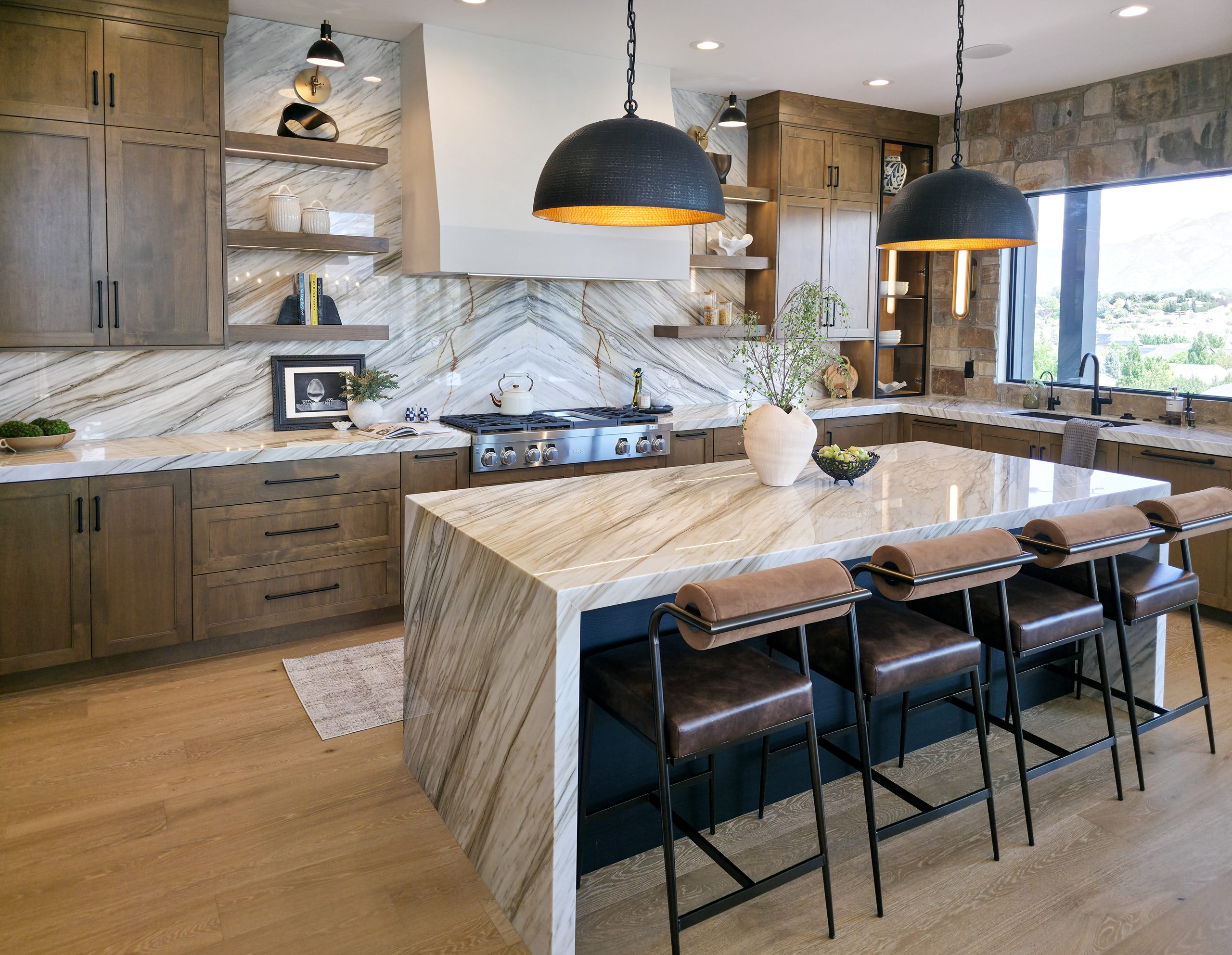
For some designs, the countertop becomes the focal point. A stone or quartz surface with noticeable veining, contrast, or movement can immediately draw attention. In this situation, hardwood with a quieter grain pattern can provide warmth without competing with the countertop.
In other kitchens, the flooring may have more character. Hardwood with prominent grain, knots, or tonal variation can become an important part of the room. A more subtle countertop can help keep the overall design balanced.
One material can lead while the other supports it.
This approach also makes the selection process easier because you are not asking every finish in the kitchen to make the same visual statement.
Undertones are one of the most important details when coordinating kitchen countertops and hardwood flooring.
A countertop may appear white, gray, beige, or cream at first glance, but subtle undertones can affect how it looks next to wood flooring. Hardwood can also contain warm, cool, neutral, golden, reddish, or brown undertones.
The two materials do not have to share the exact same undertone. However, they should look intentional when placed next to each other.
For example, a warm stone countertop may work naturally with hardwood that contains soft brown or golden tones. A cooler countertop can pair well with more neutral wood flooring, depending on the cabinetry and surrounding finishes.
Whenever possible, compare physical samples rather than relying only on photographs or computer screens.
One of the most common design mistakes is trying to match every surface in the kitchen.
Countertops, hardwood, cabinetry, backsplashes, furniture, and hardware do not need to be the same shade. Too much matching can make a room feel flat.
Instead, look for controlled contrast.
A light countertop can create a clean contrast against medium or darker hardwood flooring. A richer countertop can also work well with lighter natural wood.
When comparing kitchen countertops and hardwood flooring, look for enough difference that each material remains visible while still contributing to the same overall palette.
The goal is coordination, not duplication.
Both countertops and hardwood can contain significant visual movement.
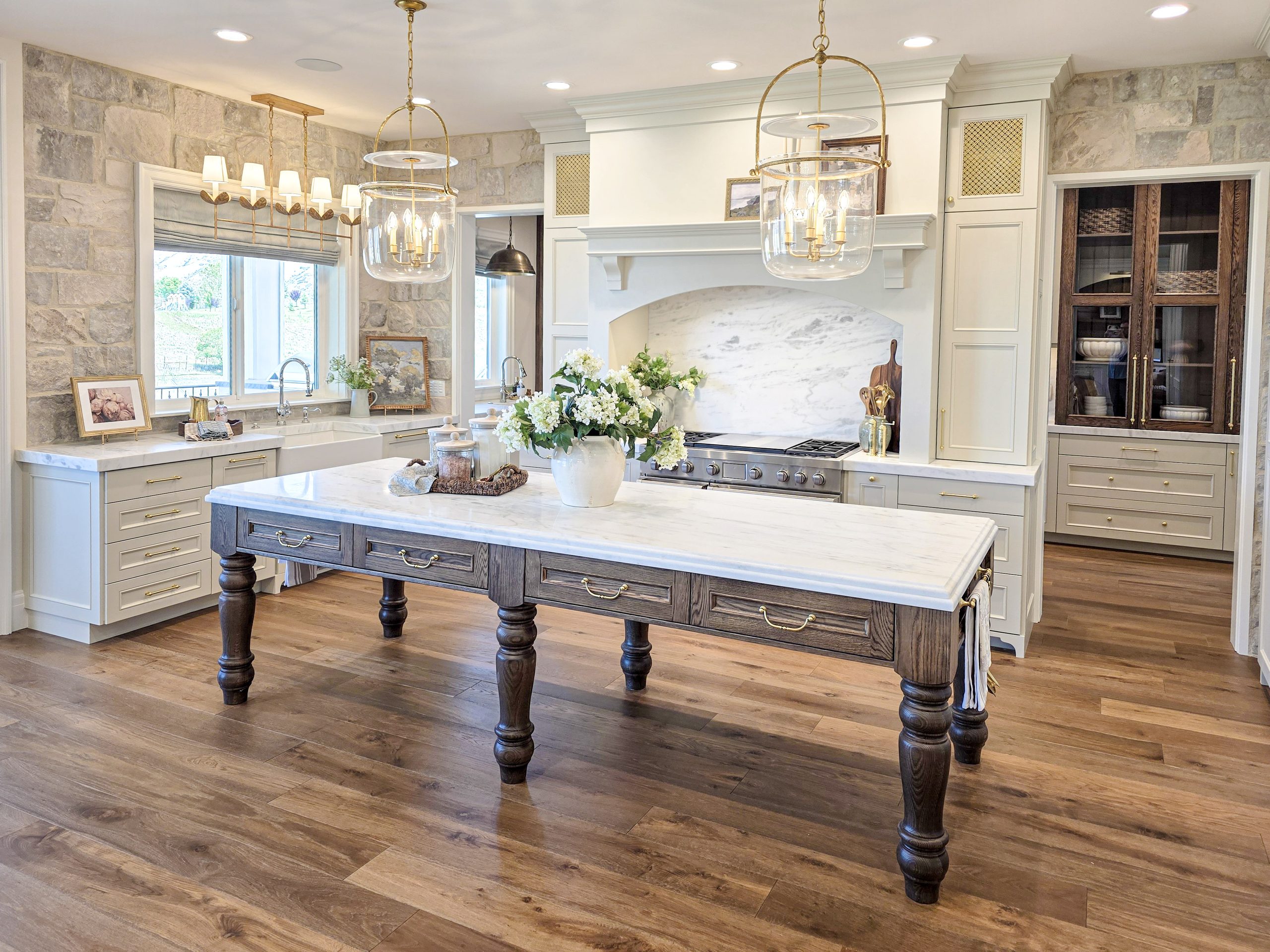
Natural stone may include veining, mineral variation, or large-scale patterns. Hardwood creates movement through grain direction, knots, plank variation, and changes in natural tone.
If both materials are highly active, the kitchen can begin to feel visually crowded.
When using a strongly veined countertop, consider hardwood with a more consistent appearance. If the flooring has significant grain and tonal variation, a calmer countertop may provide better balance.
This allows one material to create visual interest while the other gives the eye a place to rest.
A balanced combination can still include plenty of character without making every surface compete for attention.
Cabinets often act as the visual bridge between the countertop above and the hardwood below.
That is why kitchen countertops and hardwood flooring should not be selected without considering the cabinetry between them.
White or cream cabinetry can create separation between warm hardwood and a patterned countertop. Darker cabinets can add definition between lighter materials. Natural wood cabinetry introduces another layer of warmth and grain, making undertone selection even more important.
When choosing finishes, place your countertop, cabinet, and hardwood samples together.
Seeing all three materials side by side provides a much clearer picture of how the finished kitchen will look than evaluating each surface separately.
The right countertop and hardwood combination should support the overall style you want to create.
A bright, classic kitchen may combine a light countertop with natural hardwood and simple cabinetry.
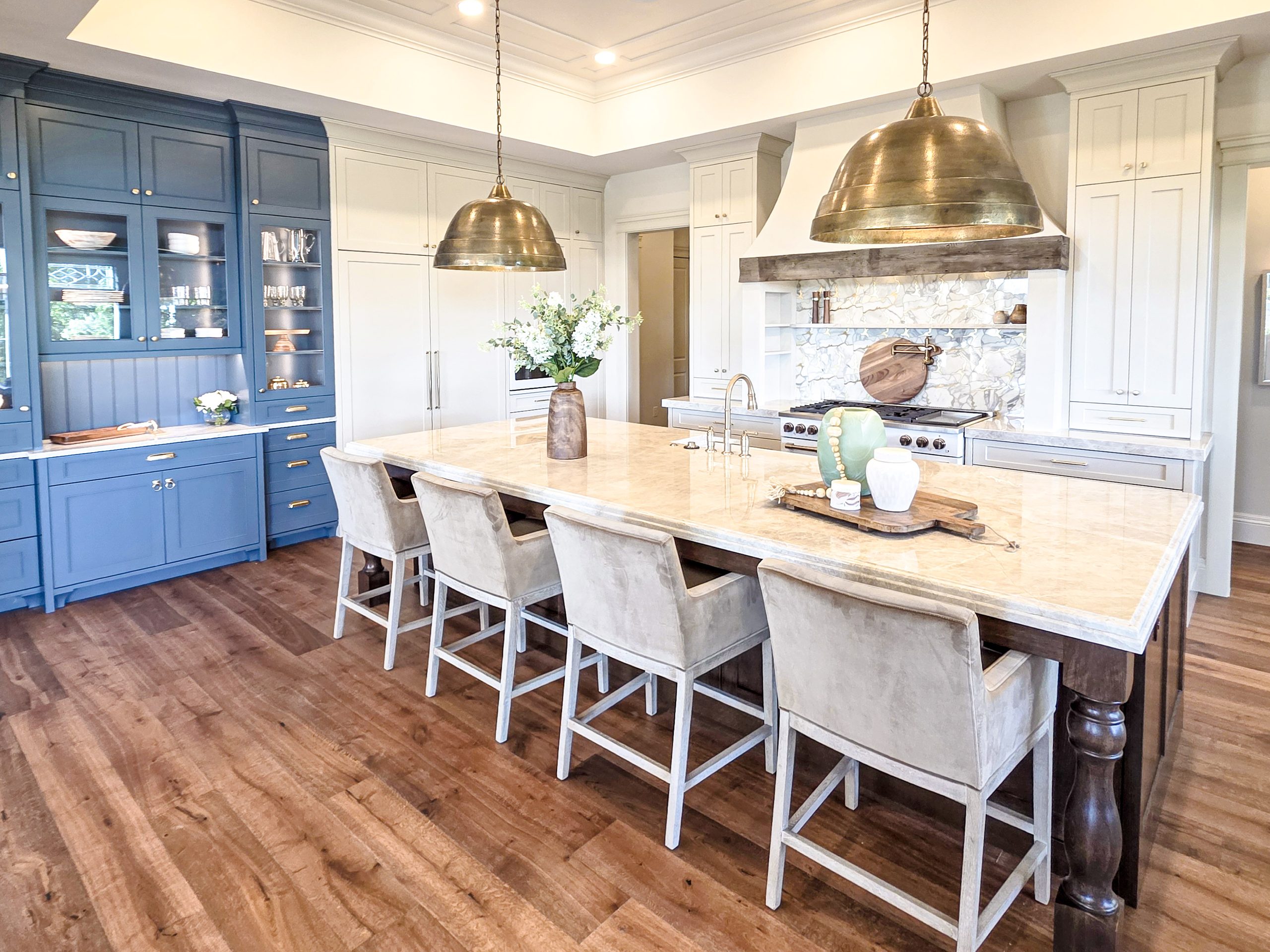
A warmer kitchen might use creamy stone, medium-toned hardwood, and soft neutral cabinets.
For a more dramatic space, a countertop with bold veining can become the centerpiece while restrained hardwood keeps the room grounded.
A refined kitchen may rely on subtle differences in tone and texture rather than strong color contrast.
There is no single correct combination. The most successful kitchen countertops and hardwood flooring pairings support the same general design direction while allowing each material to maintain its own character.
Lighting can significantly change how countertops and hardwood appear.
A material that looks warm under showroom lighting may appear cooler near a large window. Natural daylight, recessed lighting, pendant lights, and under-cabinet lighting can all affect how colors and finishes are perceived.
If possible, review your samples at different times of day.
Pay attention to:
This is especially important when working with subtle beige, gray, cream, and natural wood tones.
When possible, take samples into the actual room before making your final selection.
Color tends to receive the most attention, but texture is equally important.
A polished countertop next to natural hardwood creates contrast through finish as well as color. A countertop with subtle movement can complement flooring with visible grain. Matte and textured finishes may create a softer, more understated appearance.
When evaluating kitchen countertops and hardwood flooring, consider how the surfaces feel together visually, not just how their colors compare.
A successful kitchen palette usually contains enough variation in texture, pattern, and finish to keep the space interesting without becoming overly busy.
Countertops and hardwood flooring are only part of the kitchen design.
Backsplashes, appliances, hardware, paint colors, lighting fixtures, furniture, and nearby rooms can all influence how the materials work together.
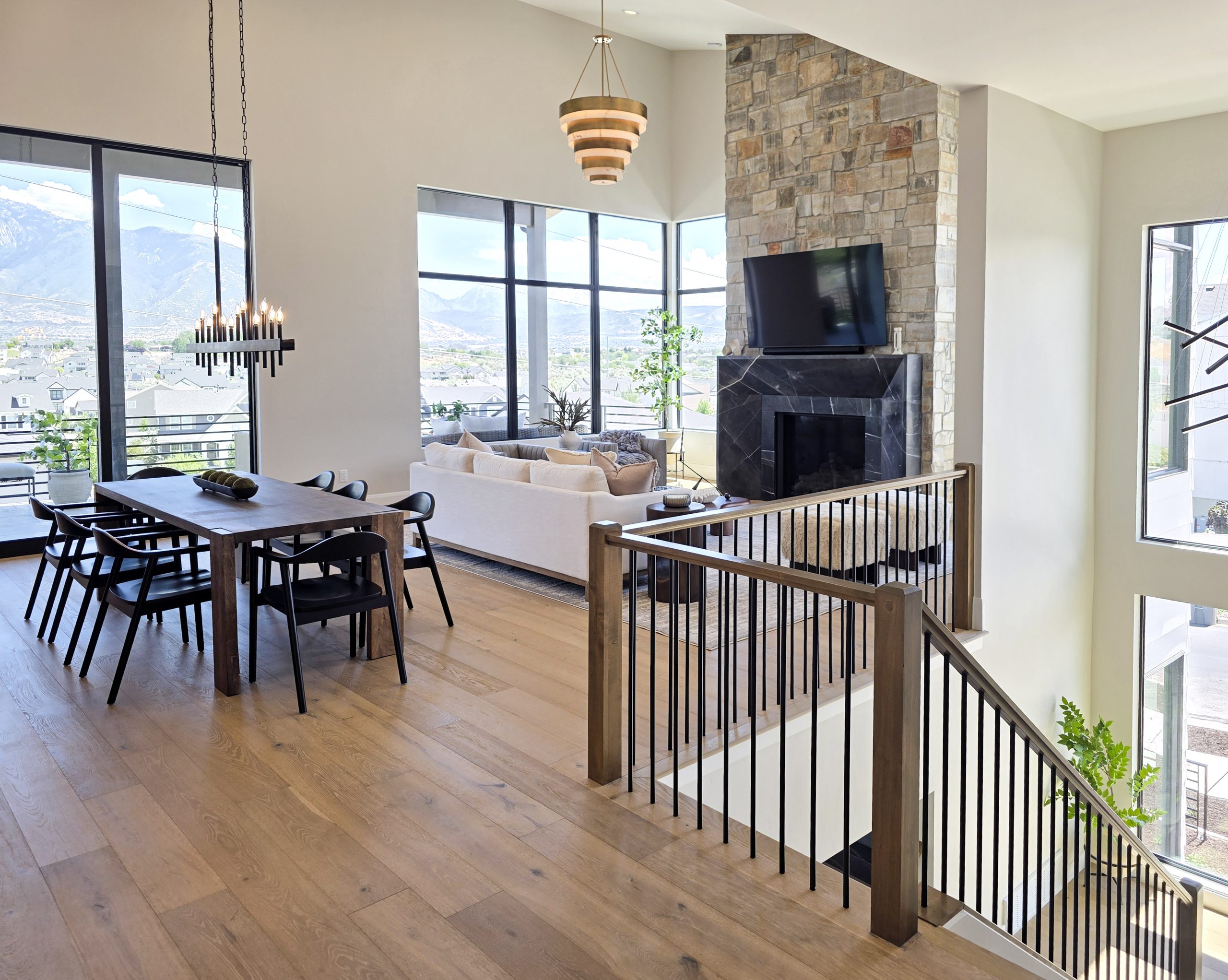
This is particularly important in open-concept homes where hardwood flooring continues from the kitchen into dining or living areas.
Instead of choosing kitchen countertops and hardwood flooring based only on a small sample board, consider how the materials will look throughout the entire space.
The flooring should work not only with the countertop, but also with surrounding furniture, wall colors, and finishes in adjoining rooms.
If you are having trouble narrowing down your options, starting with a general design direction can make the selection process easier.
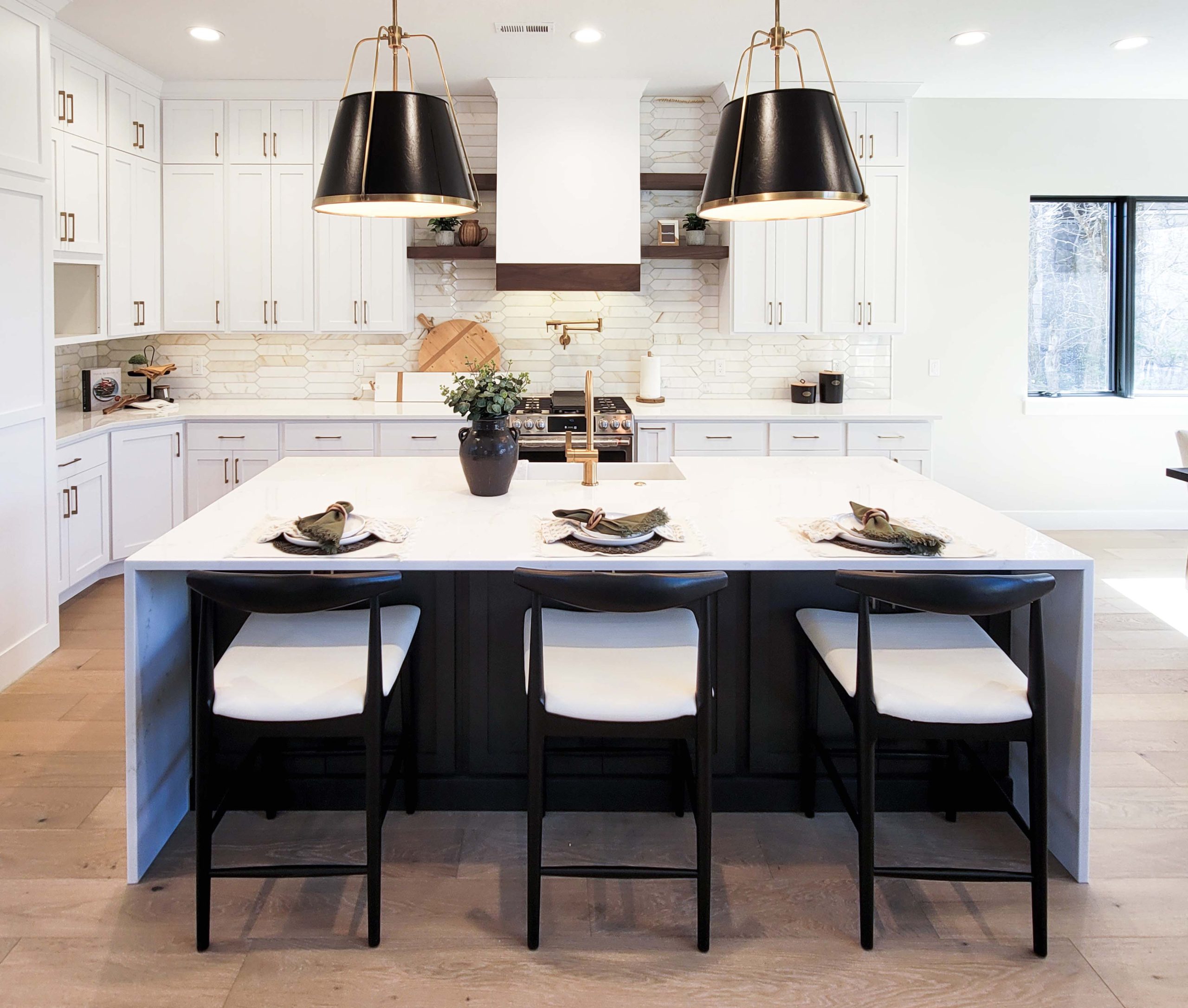
A light countertop paired with medium natural hardwood creates visible contrast while maintaining warmth.
A creamy or softly patterned countertop can work well with hardwood containing warm brown or golden undertones.
For kitchens with dramatic stone or quartz, hardwood with a more consistent grain and tone can prevent the space from feeling too busy.
If the hardwood has pronounced knots, color variation, or strong grain patterns, a quieter countertop can create balance.
These combinations are starting points rather than strict rules. The best kitchen countertops and hardwood flooring combinations depend on the cabinetry, backsplash, lighting, and overall palette of the room.
Successful kitchen countertops and hardwood flooring combinations rely more on coordination than exact matching.
Start with the material you want to feature. Compare undertones, create intentional contrast, and balance surfaces with strong patterns or movement. Then consider your cabinetry, backsplash, lighting, wall color, and surrounding finishes.
Most importantly, compare the materials together.
Seeing countertop and hardwood samples side by side makes subtle differences in color, texture, grain, and movement much easier to recognize before making a final decision.
Choosing countertops and hardwood flooring is easier when you can see the materials together instead of trying to make decisions from individual samples or online photos. At OWSI Flooring & Design, you can compare countertop, hardwood, tile, and other finish options side by side in one showroom, making it easier to build a kitchen palette that feels coordinated from the start.
Our Orem showroom is a go-to destination for homeowners, designers, and builders looking for flooring and surface materials for both new construction and remodeling projects. Whether you already have a clear design direction or are still narrowing down your options, seeing the materials in person can help you make a more confident final selection.
During our October Spooky Savings Event, countertops start at $36.95 per sq. ft., including material and installation, and hardwood flooring is $0.50 per sq. ft. off.
Bring your cabinet samples, paint colors, backsplash ideas, floor plans, or inspiration photos and compare your options in person at OWSI Flooring & Design in Orem, Utah.
A successful kitchen is not created by finding two materials that match perfectly. It comes from choosing finishes that work together throughout the entire space. Start with the surfaces that matter most, compare them side by side, and build the rest of the kitchen around a combination you will be happy to live with for years.
No. Kitchen countertops and hardwood flooring do not need to match exactly.
In many kitchens, complementary materials with some contrast create more depth and visual interest than two surfaces with nearly identical colors.
Instead of trying to create a perfect match, focus on undertones, texture, pattern, and how the materials relate to the cabinetry and other finishes.
Start with whichever material is most important to the overall design.
If you are using a dramatic countertop with noticeable veining or movement, choosing the countertop first can make it easier to select flooring that supports it.
If hardwood will continue throughout several rooms, choosing the flooring first may make more sense because it affects a larger portion of the home.
Yes. Warm hardwood paired with a white or light countertop is a popular combination because the countertop keeps the kitchen feeling bright while the flooring introduces natural warmth and texture.
Pay attention to the undertones in both materials and consider how your cabinetry connects them.
Place physical samples together under the lighting in your home whenever possible.
Look at them during both daylight and artificial light. The materials do not need to have identical undertones, but they should feel intentional when viewed side by side.
Cabinetry, backsplash materials, and wall colors should also be included when comparing samples.
Start by comparing undertones, pattern movement, and contrast.
If one material has a bold appearance, allow the other to be quieter. Viewing countertop, hardwood, and cabinet samples together is one of the easiest ways to determine whether the combination feels balanced before making a final decision.
Choosing the right countertop and hardwood combination comes down to seeing how the materials work together in the complete space. At OWSI Flooring & Design, you can compare flooring, countertops, tile, and other finishes side by side and make selections with the full design in mind.
Visit our Orem showroom with your samples, plans, or inspiration and explore your options in person. Whether you are remodeling or building from the ground up, OWSI is a go-to destination for bringing the materials, finishes, and details of your home together.