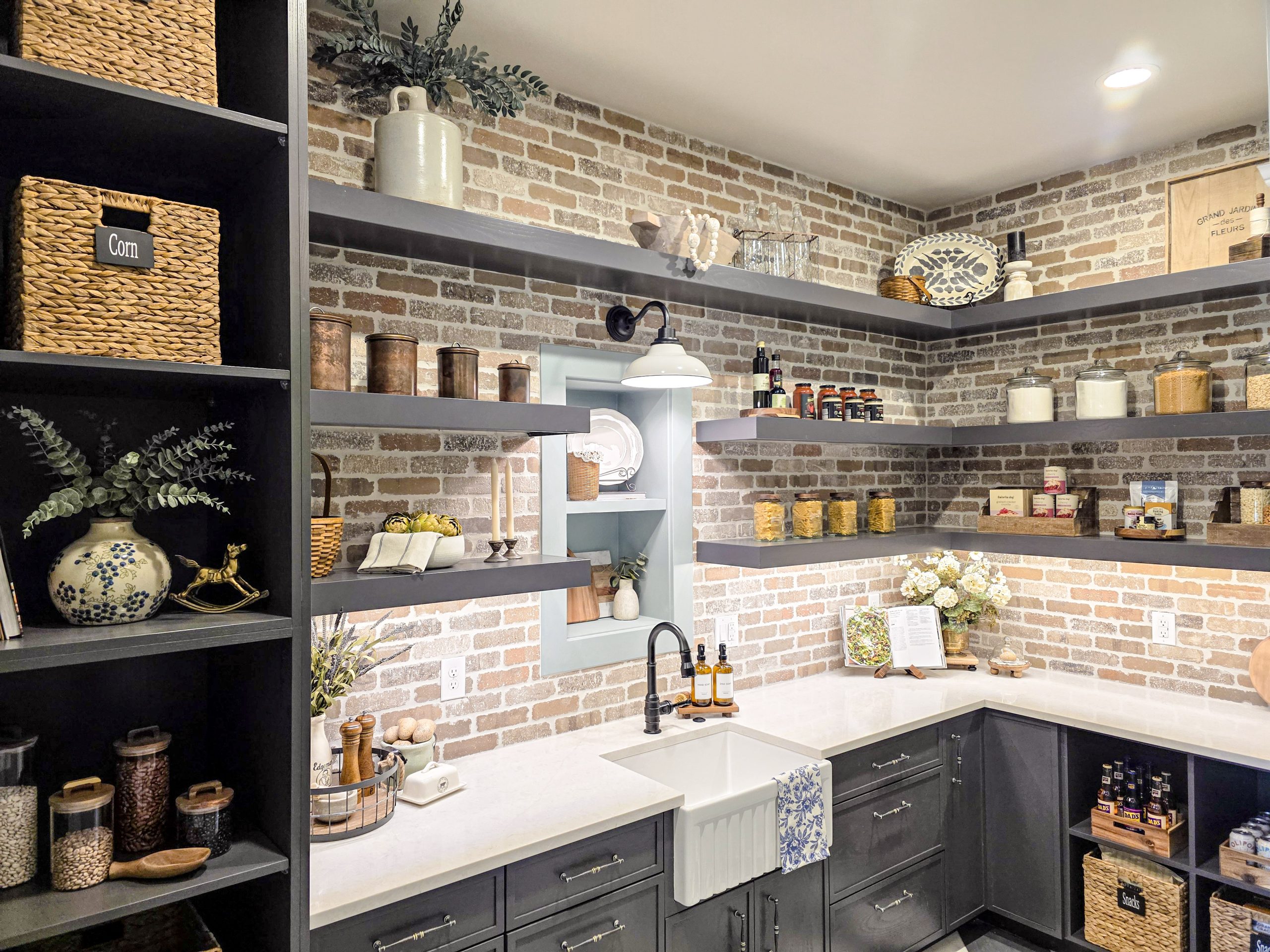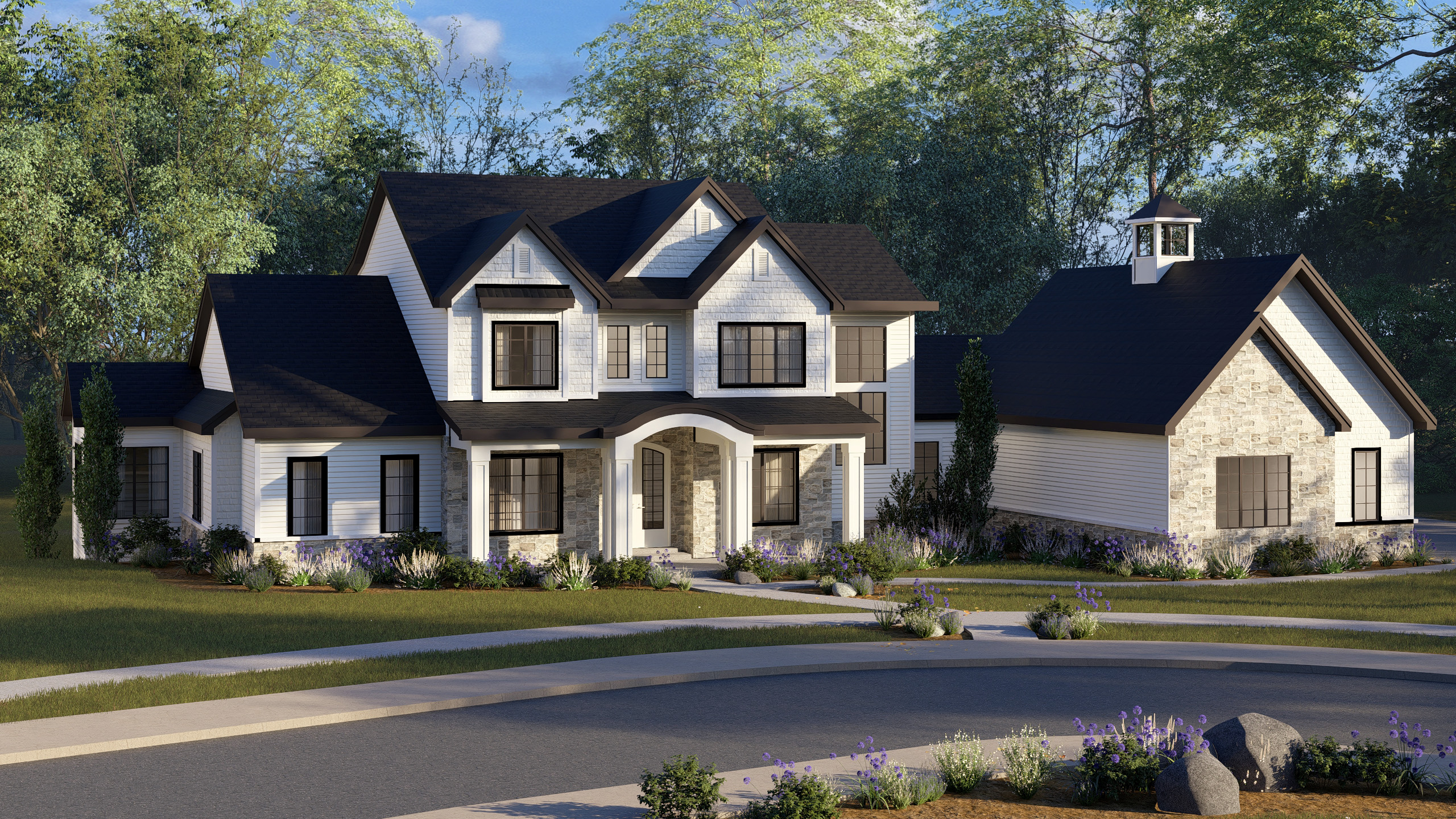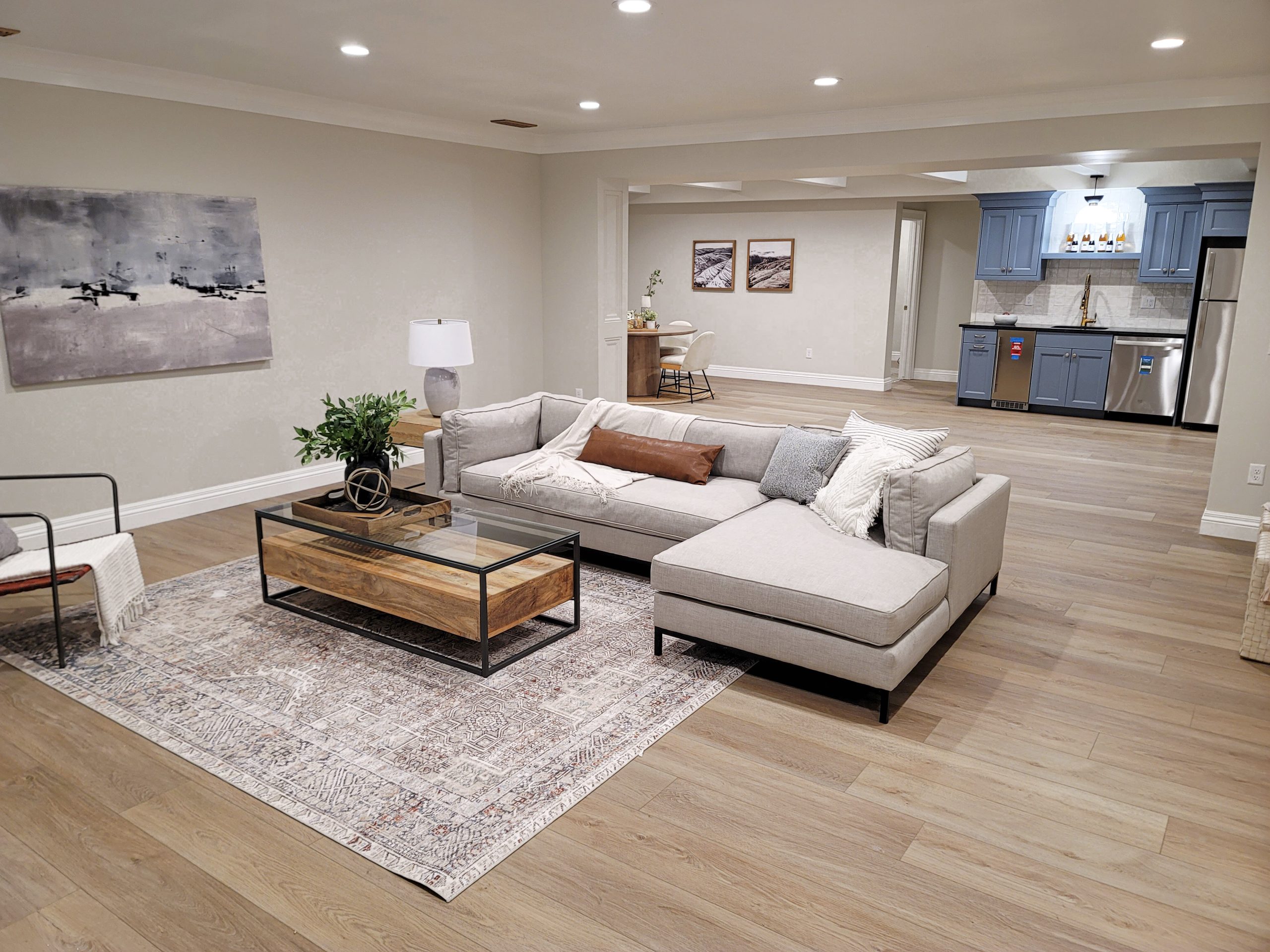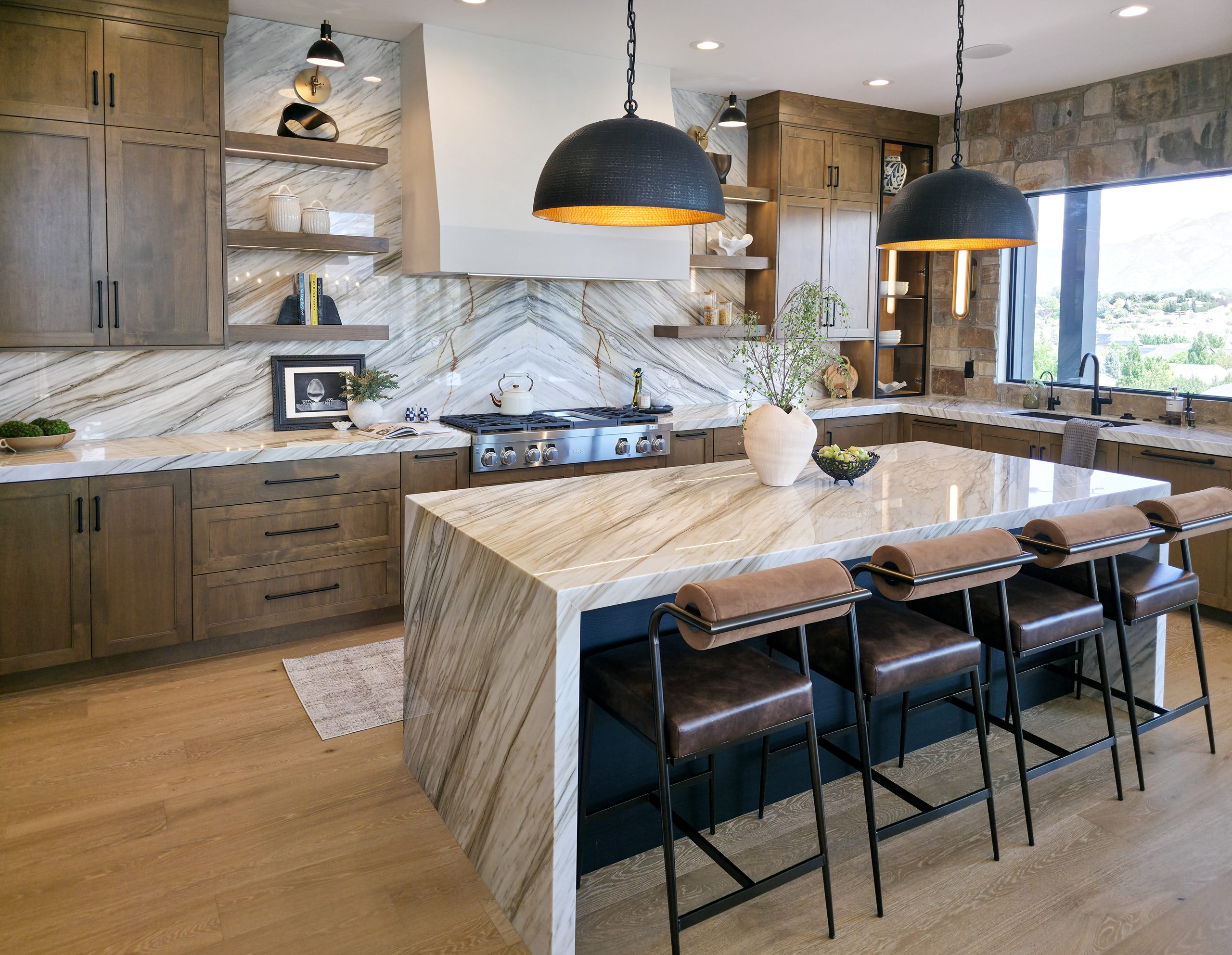


Parade of Homes design ideas often begin with a feeling.
There is a moment that happens when you step inside a beautifully designed Parade home. Before you notice the exact tile, countertop material, or width of the hardwood planks, you notice how the home feels.
The entry makes an immediate impression. The flooring creates a natural path from one space to the next. The kitchen feels elevated but still welcoming. Bathrooms feel more like personal retreats, and even practical rooms, laundry rooms, mudrooms, and powder baths, have been given thoughtful details.
That feeling is not created by one expensive feature. It comes from hundreds of design decisions working together.
As the Salt Lake Parade of Homes celebrates its 80th anniversary, it continues to offer homeowners a rare opportunity to walk through professionally designed spaces and see new ideas brought to life. It is where architecture, craftsmanship, and interior materials come together in a way that photographs and small samples cannot fully capture.
For many visitors, however, the Parade can also feel overwhelming. Every home presents a different combination of flooring, tile, cabinetry, countertops, lighting, and architectural details. It can be difficult to know which ideas will translate well into your own home or where to begin once the tour is over.
The key is not to recreate an entire Parade home exactly as you saw it.
Instead, use the experience as a guide. Pay attention to the materials, colors, and details that repeatedly catch your eye. Then choose the elements that complement your home, your lifestyle, and the way you want your rooms to feel.
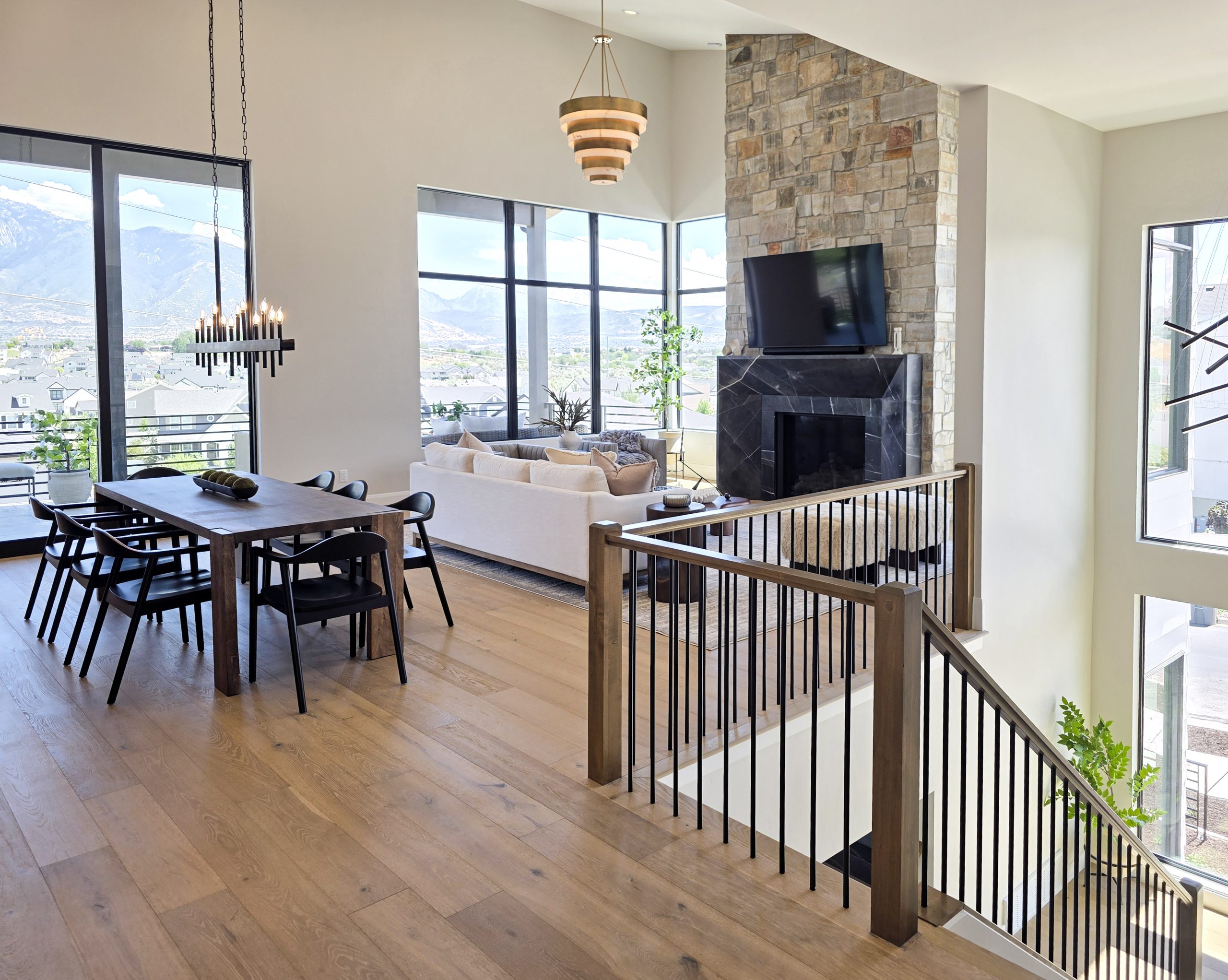
One of the most common design mistakes is selecting materials individually without considering how they will work together.
A homeowner may fall in love with a dramatic backsplash, a heavily veined countertop, and a high-variation floor. Each material may be beautiful on its own, but when placed in the same room, they can begin to compete for attention.
Parade homes often feel polished because the designers establish an overall mood before finalizing individual products.
Some homes feel bright, organic, and relaxed. Others feel bold, sophisticated, and architectural. You may see interiors built around warm woods, soft stone colors, and natural textures, while another home may use cleaner lines, cooler neutrals, and strong black accents.
Before choosing flooring, countertops, or tile, ask yourself:
What should the finished space feel like?
Warm and welcoming? Clean and contemporary? Traditional and refined? Natural and understated? Dramatic and distinctive?
Once that direction is clear, it becomes easier to decide which materials support the vision and which ones distract from it.
The strongest Parade of Homes design ideas do not begin with a single product. They begin with a clear understanding of how the entire home should look and feel.
As you tour Parade homes, try to identify the design story being told.
Notice whether the same wood tone appears in multiple rooms. Look at how the kitchen countertop relates to the fireplace surround. Pay attention to whether the flooring continues throughout the main level or changes between spaces.
A well-designed home usually has a visual thread connecting one room to another.
This does not mean every surface needs to match. In fact, homes often feel more interesting when materials are layered thoughtfully. The goal is coordination rather than duplication.
For example, a kitchen may combine warm hardwood flooring, a creamy countertop, and a textured backsplash. A nearby bathroom may use different tile but repeat the same warm undertone. The materials are not identical, yet they still belong to the same home.
When collecting Parade of Homes design ideas, focus on combinations instead of isolated products. A photograph of a complete material palette is often more useful than a close-up of one tile.
You may also notice that you repeatedly photograph similar elements, such as light hardwood, warm white countertops, handmade tile, or dark-framed mirrors. Those repeated preferences can help reveal the direction that feels most natural for your own home.
Countertops occupy a large amount of visual space, especially in kitchens with expansive islands. Because of their size and prominence, they often become the anchor for the entire material palette.
A countertop can establish the room’s color direction, influence the cabinet finish, and determine how simple or expressive the backsplash should be.
Softly veined surfaces can add movement without dominating the room. Bold veining can create an artistic focal point. Warm, stone-inspired colors can make a modern kitchen feel more approachable, while crisp, understated surfaces can support a clean and minimalist design.
When evaluating countertop options, look at the full slab whenever possible.
A small sample may not show the complete movement, pattern, or variation of the material. Seeing a larger section can help you understand how the surface will look across an island, perimeter counter, or vanity.
It is also important to view countertop materials beside the flooring, tile, and cabinet finishes. Materials change depending on what surrounds them. A white countertop may appear warmer beside natural oak and cooler beside gray cabinetry.
Many successful Parade of Homes design ideas use the countertop to give the room direction. The goal is not necessarily to choose the most dramatic surface. It is to choose one that allows the surrounding materials to feel connected.

Tile is one of the most versatile materials in a home. It can be subtle enough to create a calm foundation or expressive enough to become the defining feature of a room.
Parade homes often demonstrate how tile can elevate areas that might otherwise be treated as purely functional.
A backsplash can become the focal point of the kitchen. A shower wall can introduce texture, movement, or architectural rhythm. A patterned floor can transform a powder bathroom, laundry room, or small entry into one of the most memorable spaces in the home.
The most effective tile designs usually begin with a clear purpose.
Consider whether the tile should:
Large-format tile can give a room a quieter, more continuous look by reducing the number of grout lines. Smaller tile can add dimension and detailed craftsmanship. Handmade and textured surfaces can bring warmth and character, while polished finishes can reflect light and make a space feel more refined.
The secret is knowing where to stop.
A strong patterned floor may look best with simple wall tile. A dramatic backsplash may need a quieter countertop. When one surface takes the lead, the surrounding finishes should support it.
One of the most practical Parade of Homes design ideas is to choose one clear focal point for each room instead of asking every surface to make a statement.
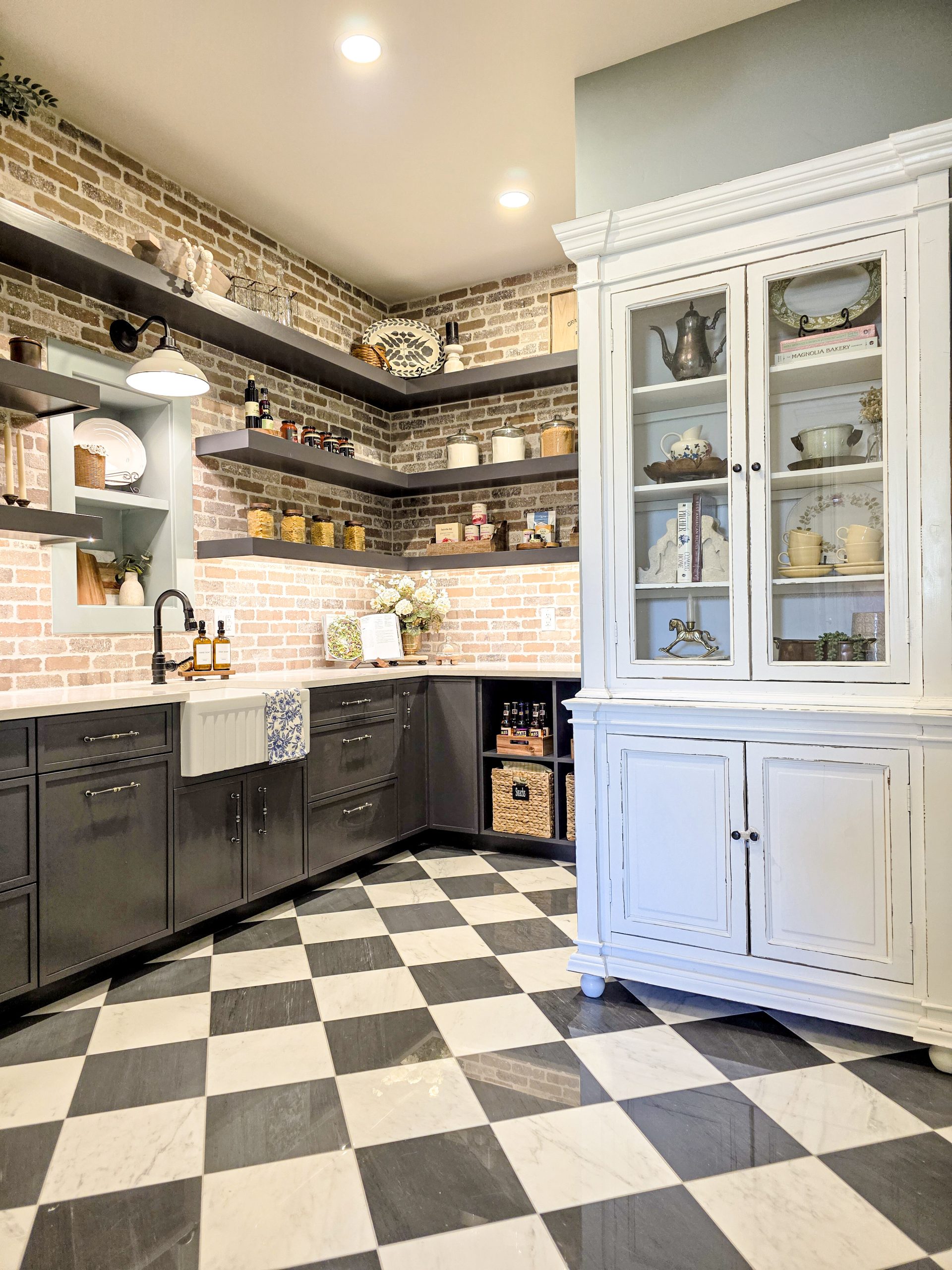
Flooring is one of the first elements you see when entering a home, and it affects nearly every room.
In many Parade homes, the flooring serves as a quiet foundation. It connects open spaces, guides movement through the home, and allows furniture, cabinetry, and architectural details to stand out.
To create a similar sense of continuity, consider using one primary flooring material throughout connected areas of the home. Extending the same flooring through the entry, living room, kitchen, and dining space can make the floor plan feel larger and more unified.
When choosing flooring, consider more than the color.
Look closely at:
A wide-plank floor can make a space feel more expansive. A low-variation floor can create a clean and calm background. Flooring with stronger grain and color movement can give the home a more organic and character-rich appearance.
Also consider the installation direction. The way the planks run through the room can influence how long, wide, or connected the space appears.
Many Parade of Homes design ideas rely on consistent flooring to create a seamless transition between connected rooms. The best selection should work with the home’s architecture while also supporting everyday life.
Not every home or room requires a natural hardwood surface.
Luxury vinyl tile, luxury vinyl plank, SPC, and other waterproof flooring products can offer durable and design-conscious alternatives. These materials are especially useful in kitchens, bathrooms, mudrooms, basements, laundry rooms, and active households where moisture resistance and easy maintenance are important.
Today’s waterproof flooring options are available in a broad range of wood and stone visuals. The most convincing designs use realistic variation, detailed surface texture, and thoughtfully repeated patterns.
When selecting a product, pay attention to the scale of the room.
Longer, wider planks can feel more contemporary and open. Smaller formats may work better in compact areas. Stone-inspired luxury vinyl tile can provide a polished appearance while offering a softer and more practical surface underfoot than some natural materials.
For a Parade-inspired result, choose waterproof flooring with the same care you would use when selecting hardwood. Consider how the color, texture, and plank direction will interact with cabinetry, countertops, and adjoining rooms.
The most useful Parade of Homes design ideas balance appearance with performance. Practical flooring does not have to look purely practical.
Hardwood flooring continues to play an important role in high-end residential design because of its natural variation, warmth, and longevity.
It can make a contemporary home feel more inviting, add authenticity to a traditional interior, or create a visual connection to Utah’s surrounding landscape.
Lighter wood tones can help a home feel open, relaxed, and filled with natural light. Medium tones offer warmth and flexibility, while darker hardwood can create contrast and a more formal atmosphere.
Consider how the floor will change throughout the day. Natural light can reveal undertones that are not immediately visible in a showroom. A wood that appears neutral under artificial lighting may show warmer, redder, or cooler tones when installed near large windows.
Species, stain, plank width, and finish all affect the final result.
A smoother surface may feel more refined, while wire-brushed or textured hardwood can bring depth and a more lived-in character. Wider planks often create a more contemporary appearance, while narrower planks can support traditional architecture.
Hardwood is frequently one of the most noticeable Parade of Homes design ideas because it influences how the entire interior feels. The right hardwood should feel connected to the home rather than selected only because it is currently popular.
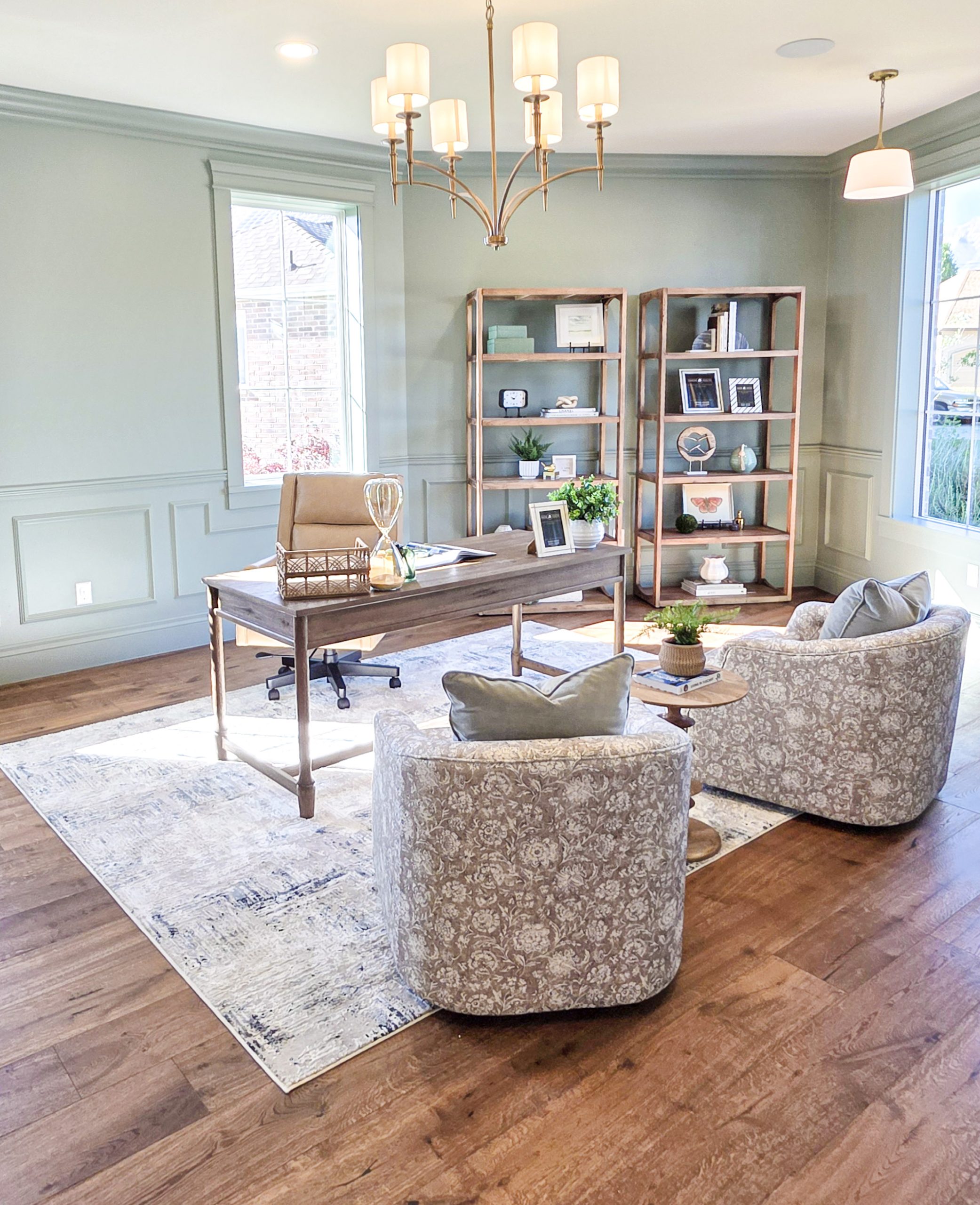
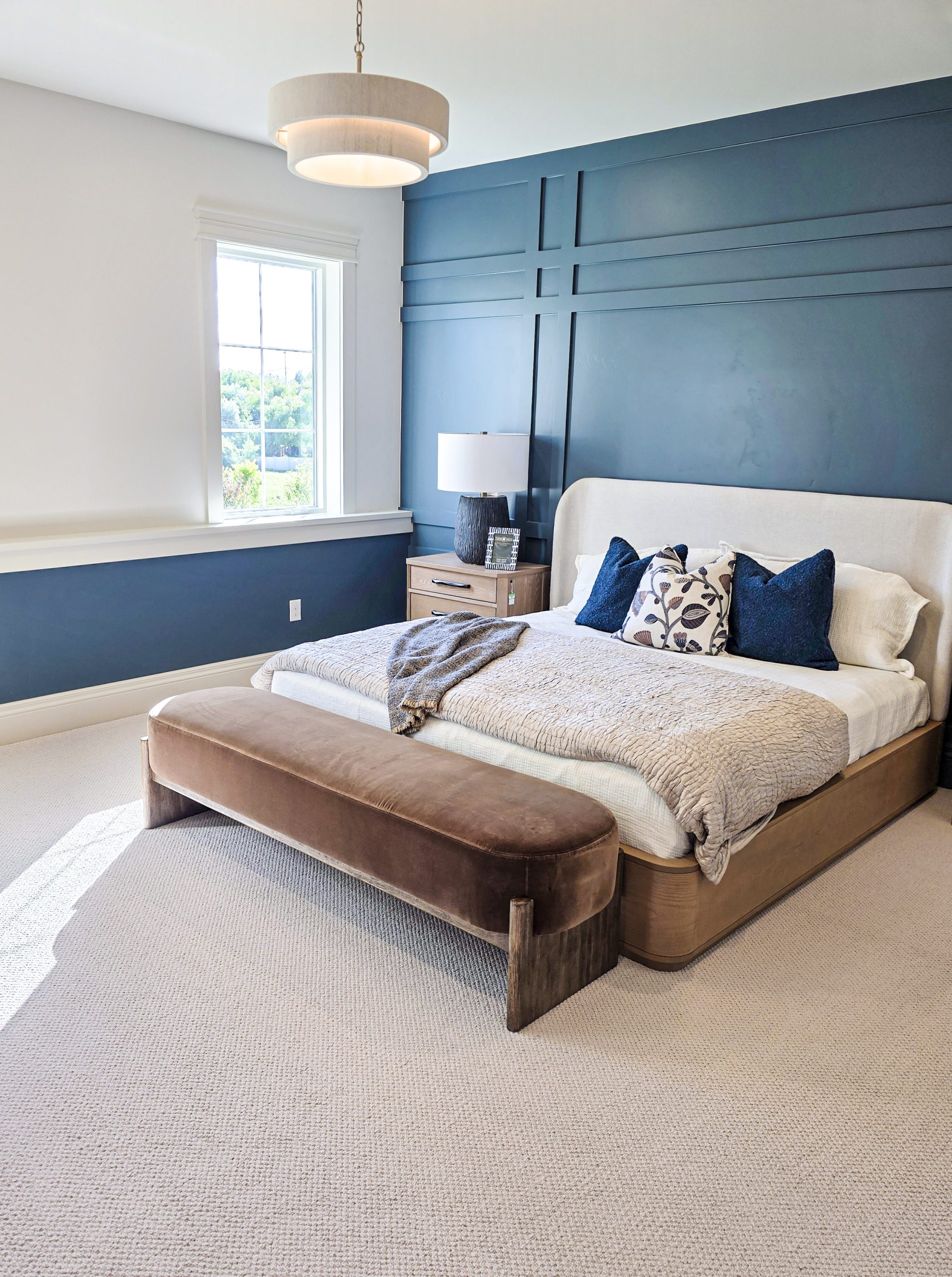
Parade homes may feature impressive stone, tile, and wood surfaces, but they also rely on softer materials to create balance.
Carpet can make bedrooms feel quieter and more comfortable. It can soften stairways, reduce noise in family rooms, and bring warmth to spaces that would otherwise feel dominated by hard surfaces.
Modern carpet offers more design flexibility than many homeowners expect.
Textured loops, subtle patterns, tonal variation, and soft geometric designs can add visual interest without overwhelming the room. A refined pattern can make a staircase feel custom, while a plush, understated carpet can create a calm bedroom retreat.
When choosing carpet, consider:
Some of the most inviting Parade of Homes design ideas combine dramatic hard surfaces with comfortable, carefully chosen carpet.
Carpet does not need to be treated as a secondary selection. When chosen thoughtfully, it becomes an important part of the home’s complete material palette.
Mirrors are essential in bathrooms and dressing areas, but their design potential extends far beyond basic function.
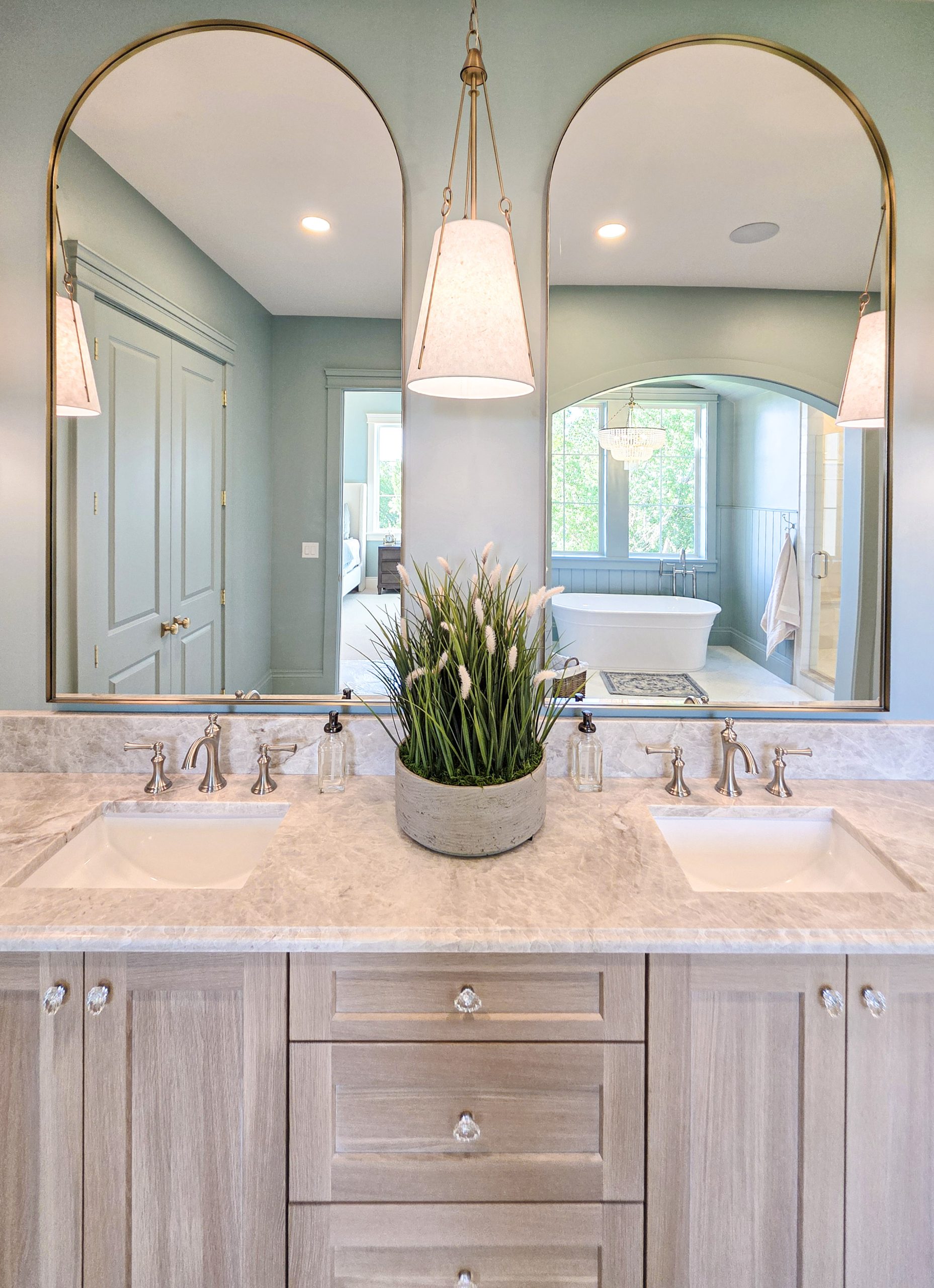
The right mirror can improve the balance of a vanity wall, reflect natural light, and make a smaller room feel more open. Its size, frame, and shape can also reinforce the overall style of the home.
An arched mirror can soften rooms with strong straight lines. A rounded mirror can introduce contrast above an angular vanity. A large rectangular mirror can create a clean and expansive appearance, while an individually framed mirror can give each sink area more definition.
Consider how the mirror relates to the lighting.
Wall sconces, pendants, and overhead fixtures should feel intentionally arranged around the mirror rather than added afterward. The proportions of the vanity, faucet, and surrounding wall should also influence the mirror’s scale.
Mirrors may be one of the more subtle Parade of Homes design ideas, but they can have a noticeable effect on how complete and intentional a bathroom feels.
Even a simple change in mirror shape, frame, or scale can give the room a more customized appearance.
You do not need to renovate an entire home at once to create a meaningful transformation.
Start with the rooms that are most visible or most frequently used.
A new backsplash and countertop can completely redirect the look of a kitchen. Updated flooring can improve the flow of the entire main level. New tile and mirrors can make a primary bathroom feel more custom. Carpet can refresh bedrooms and create a noticeably quieter, more comfortable atmosphere.
Prioritizing one or two areas allows you to make stronger decisions without stretching the budget across too many unfinished projects.
Think about where a material upgrade would create the greatest visual or functional improvement. That is often the best place to begin.
A focused update that feels complete will generally make a greater impact than several disconnected changes spread throughout the home.
This approach allows you to apply Parade of Homes design ideas in manageable stages instead of renovating the entire house at once.
The Parade of Homes is an excellent place to discover current ideas, but not every design trend belongs in every house.
Before adopting a feature, consider whether it works with your home’s architecture and whether you will still appreciate it after the initial excitement fades.
A successful interior can feel current without feeling temporary.
Neutral does not have to mean plain. Natural textures, subtle patterns, layered materials, and carefully selected contrast can give a home personality while remaining versatile.
Instead of asking, “What is everyone using right now?” ask:
What will make this particular home feel complete?
The most enduring Parade of Homes design ideas balance new inspiration with materials that feel appropriate for the people living in the home.
Your selections should support your routines, maintenance preferences, and personal style—not only what looks impressive during a short tour.
Once you have identified your preferred style, build a complete material palette.
Bring together samples of the flooring, tile, countertop, carpet, and any major cabinet or paint colors. View them side by side rather than making each decision separately.
Place the samples in different lighting conditions and look at them at various times of day. Natural light, overhead lighting, and warm evening light can each change the way a material appears.
A successful palette should have:
Not every finish needs to be the same color, but the materials should feel intentional when seen together.
The strongest Parade of Homes design ideas become easier to apply when countertops, flooring, tile, carpet, cabinetry, and paint are evaluated as one complete palette.
This step can prevent costly changes later and make the design process feel much more manageable.
It also helps turn broad Parade of Homes design ideas into a clear and coordinated list of material selections.
To celebrate the 80th anniversary of the Salt Lake Parade of Homes, OWSI Flooring & Design is presenting Salt Lake Parade of Homes Curated Savings throughout August.
The event brings together specially selected savings on the materials homeowners often notice most while touring Parade homes:
Whether you are planning a custom home, renovating an existing space, or updating one room, the goal is to help you move beyond inspiration and begin making confident, coordinated selections.
Bring your Parade photos, saved ideas, cabinet colors, floor plans, or paint samples to the OWSI Design Center. Seeing materials together can help you identify which combinations best capture the look you admired while still making sense for your own home.
This August, you can use your favorite Parade of Homes design ideas as a starting point for selecting materials that feel coordinated, practical, and personal.
The sale is not about recreating every feature from a Parade home. It is about identifying the elements that work for your home and investing in surfaces that improve the way it looks and functions.
The Salt Lake Parade of Homes offers a look at what is possible when architecture, craftsmanship, and interior design are approached as one complete vision.
But the most important lesson is not that every home should look like a Parade home.
It is that every choice should have a purpose.
The tile should add something to the room. The flooring should support both the design and the way the household lives. The countertop should anchor the palette. Carpet should introduce comfort. Mirrors should feel properly scaled and thoughtfully placed.
When these elements work together, the result feels polished without feeling staged and elevated without losing personality.
The best Parade of Homes design ideas are not necessarily the boldest or most expensive. They are the ones that complement your architecture, support your lifestyle, and help every room feel intentionally connected.
Use this year’s Parade as an opportunity to discover what you love. Then use those ideas to create a home that reflects your taste, your routines, and your own definition of beautiful living.
This August, visit OWSI Flooring & Design during Salt Lake Parade of Homes Curated Savings and begin turning your favorite Parade ideas into a home that feels intentionally designed from the ground up.